
Brass vs stainless steel jewelry is a design-by-design choice. Brass offers flexibility for cast details and sculptural shapes; stainless steel suits many chain-based and structural designs. Neither material is automatically the right choice for every collection. Review the finished sample, coating, intended wear, quantity and budget together.
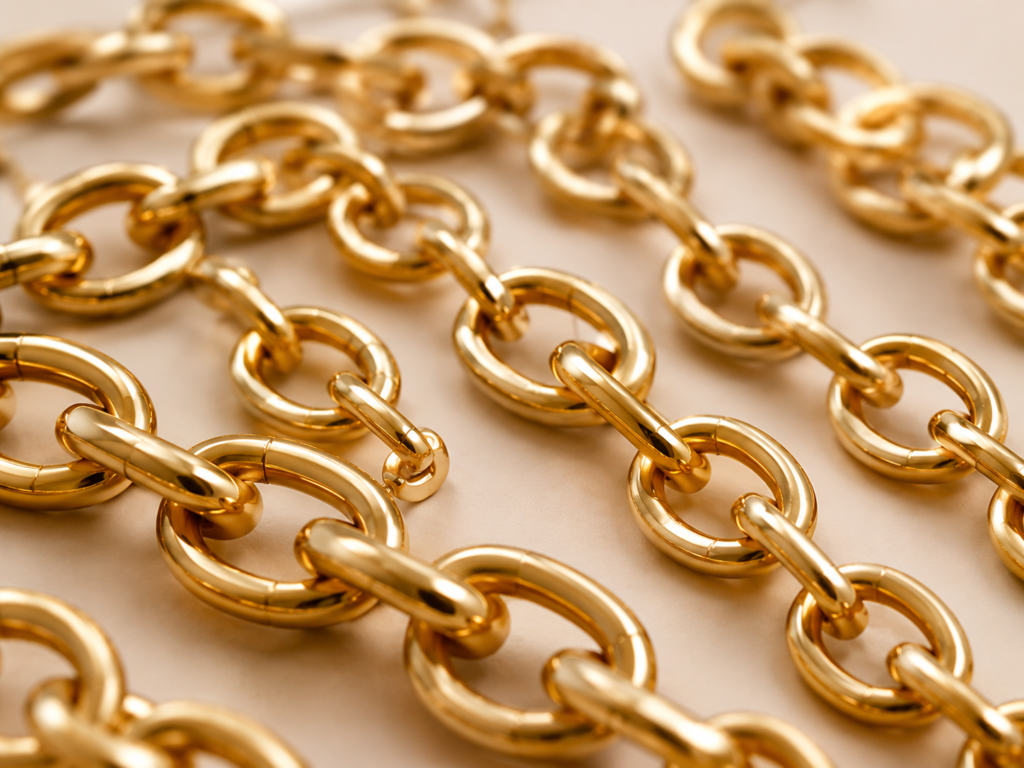
Choosing between brass and stainless steel is one of the first decisions jewelry brands face when developing a new collection.
Both materials are widely used in fashion jewelry manufacturing, but they behave differently during product development, polishing, plating and long-term wear. The right choice depends on your design, target price, finish requirements and brand positioning.
At KMJ Jewelry, we work with both brass and stainless steel across OEM, ODM and private label projects. Rather than treating one material as universally better, we look at how each material fits the product you are trying to create.
This guide explains the key differences buyers should consider before sampling.
What Is Brass Jewelry?
Brass is primarily a copper-and-zinc alloy and has been widely used in fashion jewelry because it is relatively easy to cast, shape, polish and plate.
Its workability makes it particularly useful for designs with:
- sculptural forms
- detailed cast surfaces
- stone settings
- organic shapes
- statement jewelry
- decorative textures
Brass itself has a naturally warm yellow tone, but most commercial fashion jewelry is finished with an additional surface treatment such as gold plating, silver-tone plating or another decorative finish.
For brands developing fashion-led collections with frequent design changes, brass offers a high degree of flexibility.
What Is Stainless Steel Jewelry?
Stainless steel is an iron-based alloy containing chromium, which helps give the material its corrosion resistance.
304 and 316L stainless steel are commonly used in jewelry manufacturing, depending on the product, process and performance requirements.
Compared with brass, stainless steel is harder and generally more resistant to deformation, oxidation and everyday moisture.
It works particularly well for:
- chain jewelry
- minimalist pieces
- men’s jewelry
- geometric designs
- everyday jewelry
- products requiring good structural strength
Stainless steel can be polished to a clean silver-tone finish or finished with PVD coatings in colors such as gold, rose gold or darker tones.
Brass vs Stainless Steel Jewelry: Key Differences
| Factor | Brass | Stainless Steel |
|---|---|---|
| Design flexibility | Excellent for casting and detailed shapes | Strong for clean, structural and modern designs |
| Hardness | Softer and easier to form | Harder and more resistant to deformation |
| Natural appearance | Warm yellow metal | Silver-gray metal |
| Surface finish | Commonly electroplated | Polished, electroplated or PVD coated |
| Complex detailing | Very suitable | Depends more heavily on production method |
| Corrosion resistance | Depends heavily on plating and protection | Naturally higher |
| Production cost | Depends on design, weight and plating | Depends on grade, tooling and finishing |
| Typical use | Fashion, statement and detailed jewelry | Minimal, everyday and men’s jewelry |
The important point for buyers is that material cost alone does not determine the final jewelry price.
Design complexity, polishing requirements, plating thickness, stone setting, tooling, quantity and quality standards can influence the cost just as much as the base material.
Which Material Offers More Design Flexibility?
For highly detailed or sculptural designs, brass often provides greater flexibility.
Because brass is easier to cast and work with, manufacturers can produce complex shapes, decorative surfaces and intricate stone-setting structures more efficiently.
This is one reason brass remains popular for fashion jewelry brands developing trend-driven collections.
Stainless steel, by contrast, is harder. It performs very well in designs that benefit from structural strength, but certain complex forms may require different manufacturing methods or additional tooling.
Choose brass when:
You are developing highly detailed, decorative or fashion-led designs.
Consider stainless steel when:
The collection focuses on cleaner lines, chains, geometric forms or stronger everyday pieces.
Which Material Is More Durable?
Stainless steel generally has an advantage in terms of the base material’s corrosion resistance and hardness.
The metal itself is less prone to oxidation and deformation under normal use.
Brass is softer and contains copper, which means the quality of polishing, plating and protective finishing becomes particularly important.
However, durability should not be judged by the base material alone.
A well-produced brass item with proper surface preparation, suitable plating thickness and protective coating can perform very differently from a low-quality brass item with thin plating.
Similarly, stainless steel jewelry with a poor coating process can still experience surface wear.
For buyers, the better question is therefore:
What material and finishing system is being used together?
How Does Plating Differ Between Brass and Stainless Steel?
This is one of the biggest differences buyers should understand.
Brass Jewelry Plating
Brass jewelry is commonly finished through electroplating.
Typical finishes can include:
- gold tone
- silver tone
- rose gold tone
- other decorative metallic finishes
Before plating, the surface must be polished carefully because plating does not hide poor workmanship.
Small pits, scratches or uneven surfaces can become even more visible after plating.
This is why surface inspection before plating is an important part of brass jewelry quality control.
Related reading:
How Surface Defects Affect Jewelry Plating Quality
Stainless Steel Jewelry Finishing
Stainless steel can retain its natural polished silver appearance or receive additional surface treatments.
PVD is widely used for stainless steel jewelry because it can provide a thin, hard decorative coating with good adhesion when the process is properly controlled.
Gold PVD is therefore common in:
- stainless steel necklaces
- bracelets
- rings
- men’s jewelry
- everyday collections
The choice between electroplating and PVD should depend on the required appearance, product construction, target cost and expected wear.
Which Material Is More Cost-Effective?
There is no universal answer.
A common mistake is to compare only the raw material price.
For OEM jewelry manufacturing, the final unit cost can include:
- material weight
- casting or forming
- tooling
- polishing
- stone setting
- plating
- coating
- assembly
- quality control
- packaging
- order quantity
For example, a lightweight brass design with simple plating may be cost-efficient, while a heavily detailed brass item requiring extensive polishing and stone setting may be much more expensive.
Likewise, stainless steel can appear cost-effective at material level, but specialized tooling, machining or PVD requirements may increase the production cost.
For buyers, the most accurate comparison should therefore be made design by design, not material by material.
Which Material Is Better for Gold Jewelry Looks?
Both can produce attractive gold-tone jewelry, but the processes are different.
Brass
Brass is well suited to traditional electroplating and can achieve a wide range of fashion jewelry finishes.
The final cost and performance are heavily influenced by:
- surface preparation
- plating material
- plating thickness
- protective coating
- QC standard
Stainless Steel
Gold-tone stainless steel is frequently produced using PVD.
This option is particularly attractive for simple, modern jewelry where durability and everyday wear are priorities.
Therefore:
Brass may be more suitable for detailed fashion designs.
Stainless steel with PVD may be more suitable for streamlined everyday pieces.
What About MOQ and Production?
MOQ should not be selected based on material alone.
It depends on:
- design complexity
- tooling requirements
- plating color
- PVD batch requirements
- components
- stone colors
- packaging
- production method
For example, a simple stainless steel item made using existing components may support a different MOQ from a fully customized stainless steel item requiring new tooling and a dedicated PVD color batch.
The same applies to brass.
At KMJ, we normally review the actual design and finish requirements before confirming MOQ and pricing.
This prevents brands from making material decisions based on an unrealistic general MOQ figure.
Which Material Is Better for Your Jewelry Brand?
The answer depends on what you are trying to achieve.
Brass may be a better choice if you need:
- intricate designs
- sculptural forms
- detailed casting
- decorative textures
- fashion-forward collections
- flexible electroplating options
Stainless steel may be a better choice if you need:
- high structural strength
- corrosion resistance
- clean modern designs
- chain-based products
- men’s jewelry
- PVD finishes
- everyday collections
For some brands, the best solution is not choosing one material for the entire collection.
It is common to use different materials for different product categories depending on design and performance requirements.
The Better Question: What Is the Right Material for This Design?
Instead of asking:
“Is brass or stainless steel better?”
A more useful sourcing question is:
“Which material is better for this particular design, finish, price point and customer?”
That is how we normally evaluate projects at KMJ.
A jewelry material should support:
- the design
- the expected finish
- the target retail price
- the desired durability
- the production quantity
- the brand’s positioning
Choosing the right material early can reduce unnecessary sampling revisions, production problems and unexpected cost increases later.
Frequently Asked Questions
Is brass good for high-quality jewelry?
Yes. Brass is widely used in quality fashion jewelry because it can be cast, polished and plated into sophisticated designs. Final quality depends strongly on workmanship, plating and quality control rather than the material name alone.
Does stainless steel jewelry need plating?
Not necessarily. Stainless steel can be polished and used in its natural silver tone. Gold and other colors are commonly achieved through additional finishes such as PVD.
Is stainless steel always cheaper than brass?
No. Final jewelry cost depends on much more than raw material, including tooling, design complexity, polishing, finishing, quantity and production method.
Which is better for detailed jewelry designs?
Brass is often more suitable for intricate cast details and sculptural fashion jewelry because it is easier to work and finish.
Which is better for everyday jewelry?
Stainless steel is often chosen for everyday collections because of its hardness and corrosion resistance, although the final choice should still depend on the design and finish.
Can one jewelry collection use both materials?
Yes. Some brands use brass for detailed statement pieces and stainless steel for cleaner, more durable everyday styles.
Not Sure Which Material Fits Your Design?
Choosing the right base material can affect your jewelry’s appearance, production method, plating options, durability and final cost.
Send us your design, reference image or product idea. Our team can review the construction and help you evaluate whether brass or stainless steel is the more suitable option for your project.
Material references and further reading
For background on alloy composition, see the Copper Development Association’s brass alloy tables. For corrosion mechanisms, see Outokumpu’s stainless steel guidance. These explain material properties, not the performance of a particular finished jewelry item.