
Jewelry plating quality starts with the surface underneath. Pits, scratches and uneven polishing can remain visible after coating. Identify the defect, agree an appropriate correction and inspect again before plating. The goal is consistent workmanship suited to the design and approved sample.
For jewelry brands, one of the biggest sourcing concerns is not simply whether a supplier can make an attractive sample. The real concern is whether the same quality can be maintained consistently throughout bulk production.
Small surface defects may appear insignificant during production, especially before the jewelry is plated. However, once electroplating is completed, these imperfections can become more visible and affect the overall appearance of the finished product.
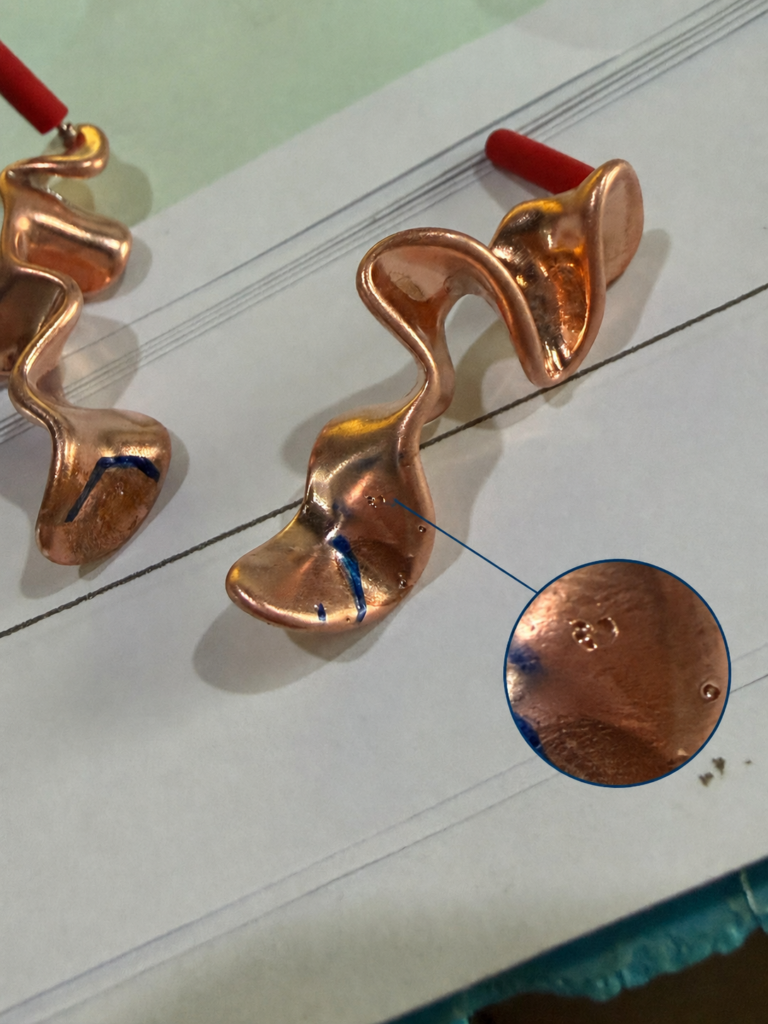
The earrings shown in the image provide a good example. The marked areas show small pits and holes that require assessment of the casting and surface preparation. Although these defects are subtle, they do not meet our quality requirements and must be corrected before the pieces move to the next production stage.
What Are the Small Holes on the Jewelry Surface?
These tiny holes are commonly described as surface pits, pinholes or porosity. They may be caused by the casting process, the structure of the raw casting or insufficient polishing and surface preparation.
On a raw or semi-finished jewelry component, these imperfections can be difficult to notice under normal lighting. However, an experienced inspector can identify them through visual inspection, touch and examination from different angles.
This is why workmanship standards matter.
Two factories may use similar materials and plating specifications, but the final jewelry quality can still be very different. The difference often comes from how carefully each piece is cast, filed, polished, inspected and prepared before plating.
Can Electroplating Cover Small Surface Defects?
A common misunderstanding is that electroplating can cover imperfections on the metal surface.
In reality, plating follows the condition of the base surface. It can change the color and finish of the jewelry, but it cannot reliably hide pits, scratches, rough edges or uneven polishing underneath.
If a piece with small surface holes is sent directly for electroplating, the plated finish may show:
- Visible pinholes or uneven spots
- Rough or inconsistent reflections
- Uneven color around the defective area
- A finish that looks less smooth and refined
- Greater risk of customer complaints or product rejection
A high-quality plated finish therefore begins long before the jewelry enters the plating workshop. Proper casting, filing, polishing and pre-plating inspection are all essential.
Why Is This a Serious Concern for Jewelry Brands?
For a jewelry brand, a small production defect can create a much larger commercial problem.
Customers judge jewelry through close-up product photography, unboxing experiences and direct physical inspection. Small pits or uneven surfaces may be especially noticeable on polished gold- or silver-tone finishes.
If defective pieces reach the market, the brand may face:
- Inconsistent quality within the same collection
- Negative reviews and customer returns
- Additional sorting or reworking costs
- Delayed product launches
- Reduced confidence in the supplier
- Damage to the brand’s quality positioning
This is particularly important for custom jewelry production. Brands invest time and money in product development, packaging, photography and marketing. Surface defects that could have been identified during manufacturing should not be discovered only after the goods arrive.
How KMJ Checks Jewelry Plating Quality During Production

At KMJ Jewelry, quality control is not limited to a final inspection after production is completed. We inspect the jewelry at several critical stages so that problems can be identified before more time and cost are added to the product.
First Inspection: After Filing and Polishing
The first inspection takes place after the jewelry components have been filed, shaped and polished.
At this stage, our team checks for issues such as:
- Small pits and surface holes
- Casting marks
- Scratches and rough areas
- Uneven edges
- Incomplete polishing
- Shape inconsistencies
- Excess metal around joints or detailed areas
The blue marks in the image indicate defects found during this inspection.
Pieces that do not meet our surface requirements are not allowed to proceed directly to electroplating. They are returned to the polishing team for further correction and re-inspection. If a defect is too deep to be corrected safely through polishing, the piece may need to be rejected or remade.
This prevents an unsuitable base surface from affecting the plating result.
Second Inspection: Before Electroplating
After reworking and surface preparation, the jewelry is inspected again before electroplating.
This second inspection is particularly important because electroplating cannot correct poor workmanship underneath the coating. The surface must already be smooth, clean and properly prepared before plating begins.
Our inspectors confirm that the previously identified defects have been corrected and check the pieces again for scratches, polishing marks, pits, rough edges and other visible imperfections.
Only products that pass this stage are approved for electroplating.
Third Inspection: After Electroplating
Once electroplating is completed, the finished jewelry undergoes a third quality inspection.
At this stage, we check both the surface workmanship and the plating result, including:
- Plating color consistency
- Surface smoothness
- Visible pits or scratches
- Uneven or missing plating
- Stains and discoloration
- Marks caused during handling
- Overall appearance and finish
The finished products are examined under suitable lighting and from different angles because some imperfections are only visible when light reflects across the surface.
Products that do not meet the approved quality standard are separated and handled according to the type and severity of the defect.
Quality Is Built During Production, Not Added at the End
Final inspection is important, but it should not be the first time a factory checks the product carefully.
If surface defects are only discovered after electroplating, the supplier may need to strip the plating, polish the product again and repeat the plating process. This creates additional costs, wastes production time and may affect the delivery schedule.
More importantly, repeated processing is not always the best solution for the product.
A stage-by-stage jewelry quality control process helps identify defects closer to their source. This makes corrective action more effective and reduces the risk of unsuitable pieces continuing through production.
Our three inspection stages are designed to answer three essential questions:
- Is the metal surface properly finished after filing and polishing?
- Is the product ready for electroplating?
- Does the finished plating meet the approved quality standard?
What Jewelry Buyers Should Ask Their Manufacturers
When evaluating a custom jewelry manufacturer, buyers should look beyond the plating color or the appearance of one finished sample.
Useful questions include:
- At which production stages is the jewelry inspected?
- How are surface pits and casting defects handled?
- Is there a separate inspection before electroplating?
- Are defective pieces reworked, rejected or remade?
- How does the factory control consistency across bulk production?
- Can the supplier provide examples of its quality control process?
The answers can reveal whether quality control is built into the manufacturing process or treated only as a final sorting step.
A Reliable Finish Starts with Careful Workmanship
The quality of plated jewelry depends on more than the plating specification alone. The condition of the casting, the skill of the polishing team, the cleanliness of the surface and the timing of quality inspections all influence the final result.
At KMJ Jewelry, we believe that small defects should be identified inside the factory—not discovered by the brand or its customers after delivery.
By carrying out inspections after polishing, before electroplating and after electroplating, we aim to maintain consistent surface quality and reduce avoidable defects in custom jewelry production.
If you are developing a brass or stainless steel jewelry collection and want to understand how workmanship, surface preparation and plating standards will be controlled during production, contact KMJ Jewelry to discuss your project.
Frequently Asked Questions
Why do small holes appear on jewelry surfaces?
Small holes may result from casting porosity, the condition of the raw casting or insufficient surface preparation. They should be identified and assessed before electroplating.
Can jewelry plating hide scratches and pinholes?
No. Electroplating generally follows the condition of the underlying metal surface. Scratches, pits and uneven polishing may remain visible or become more noticeable after plating.
When should jewelry be inspected during production?
Inspection should take place at critical production stages, including after filing and polishing, before electroplating and after electroplating. Additional inspections may also be required during assembly and final packing.
What happens when surface defects are found before plating?
The pieces should be separated and returned for corrective polishing where appropriate. If a defect is too deep or cannot be corrected without affecting the design, the product may need to be rejected or remade.
Why is pre-plating inspection important?
Pre-plating inspection prevents unsuitable products from entering the plating process. It reduces unnecessary rework, protects the production schedule and helps achieve a smoother, more consistent finish.
Technical background
Rio Grande’s guide to jewelry plating explains why preparation is important for professional-quality results. This is general process guidance, not a certification of any finished product.
Pingback: Jewelry Plating Costs: How to Compare OEM Quotes | KMJ